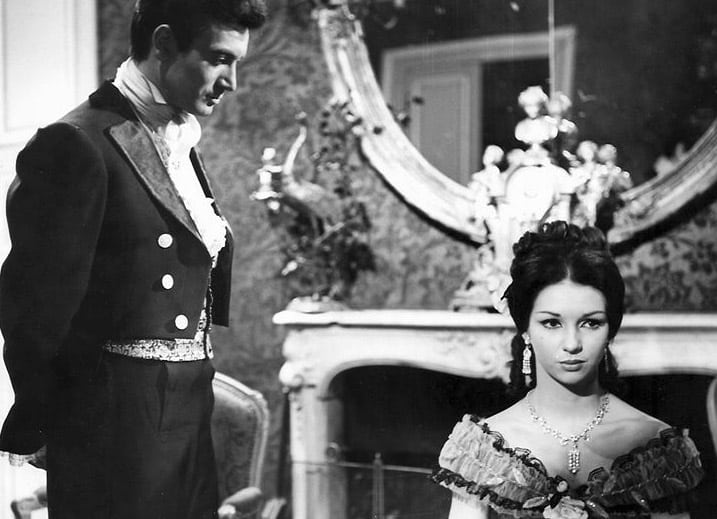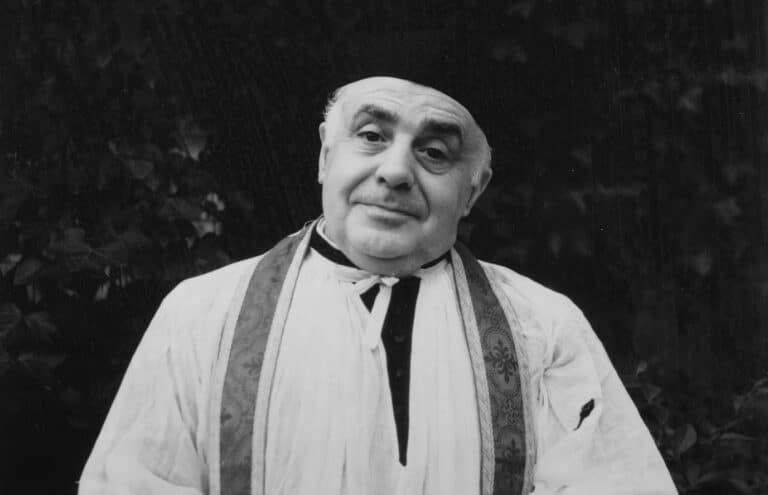
Synopsis
When the village baker refuses to bake bread because his unfaithful wife has left with a handsome shepherd… The individual drama takes on a collective dimension. Raimu gives us a prodigious interpretation that made Orson Welles say he was the greatest actor in the world. The film was, along with La Trilogie, one of Pagnol’s greatest successes.
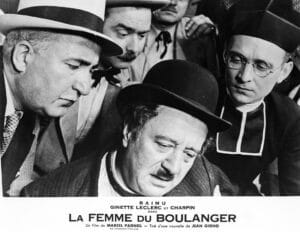
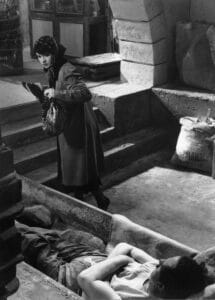
“He’s a prodigious actor… At first he didn’t want to play the baker. It had to be Maupi. But when he read the text, he came to me and said: “Don’t you think I should do it? When he gets drunk and tries to roll a cigarette, he who had never rolled one in his life, he is fantastic, everyone was in admiration, we did not dare stop the camera.
Marcel Pagnol
Technical data
- Genre: Drama
- Duration: 2h15
- Director: Marcel Pagnol
- Script and dialogues: Marcel Pagnol
- Music: Vincent Scotto
- Photography: Georges Benoît
- Sound: Marcel Lavoignat
- Editing: Marguerite Renoir, Suzanne de Troye, assisted by Jeannette Ginestet
- Set photographer: Roger Corbeau
- Production: Les Films Marcel Pagnol
Distribution
- Raimu: Aimable Castanier, the baker
- Ginette Leclerc: Aurélie, the baker’s wife
- Charles Moulin: Dominique, the Piedmontese shepherd
- Fernand Charpin: Marquis Castan de Venelles, mayor of the village
- Robert Vattier: the priest
- Alida Rouffe: Céleste, the priest’s maid
- Maximilienne:Miss Angèle
- Robert Bassac: the teacher
- Édouard Delmont: Maillefer dit ” Patience “, the fisherman
- Charles Blavette: Antonin dit “Tonin
- Odette Roger: Miette, Antonin’s wife
- Paul Dullac: Casimir, the tobacconist
- Julien Maffre: Pétugue
- Marcel Maupi: Barnabas
- Jean Castan: Spirit, a shepherd
- Charblay (Jean-Baptiste Chappe): Arsene, the butcher
- Yvette Fournier: Hermine
- Adrien Legros : Barthelemy
- Gustave Merle: the Papet
- Marius Roux: a messenger
- José Tyrand: a messenger